




 BooksCLASSIFICATION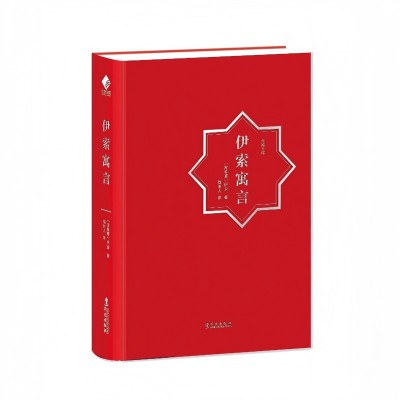
Title: Aesop's Fables
Author: Aesop (Ancient Greek)
Translator: Zhou Zuoren
Publisher and Distributor: Sino-Culture Press
Edition: 1st Edition, April 2021
Printing: 1st Printing, April 2021
Format: Hardcover, 16 - mo
Printed Sheets: 26.5
Word Count: 210,000 words
ISBN: 9787507554434
Price: 68.00 CNY
As a genre of literary works, fables reflect people's life wisdom. Aesop's Fables is the world's earliest collection of fable stories. Originally named "The Aesopica", it gathers the satirical stories that circulated among the ancient Greek people. After being processed and collated by later generations, it has been passed down to this day. The book contains many well - known stories that have accompanied our growth, like lamps of wisdom illuminating our childhood. With concise lengths, vivid images, and apt metaphors, the author expounds on life philosophies that are both easy to understand and thought - provoking.
As a genre of literary works, fables reflect people's life wisdom. Aesop's Fables is the world's earliest collection of fable stories. Originally named "The Aesopica", it gathers the satirical stories that circulated among the ancient Greek people. After being processed and collated by later generations, it has been passed down to this day. The book contains many well - known stories that have accompanied our growth, like lamps of wisdom illuminating our childhood. With concise lengths, vivid images, and apt metaphors, the author expounds on life philosophies that are both easy to understand and thought - provoking. Aesop's Fables is well worth reading. It gives us at least three kinds of comfort. First, it is an ancient book, and reading it can increase our pride in modern civilization. Second, it is a children's book, and reading it makes us feel even more that we are adults, having surpassed those naive views. Third, this book is mostly about animals. Just think about how much evolutionary progress it took to transform from animals to humans!(Qian Zhongshu, a renowned Chinese writer and literary researcher)
Aesop created stories through his own power of thought to strive for freedom. When we look at Aesop and Aesop's Fables in this way, we will feel a kind of warmth and touch towards this matter and this period of history. This is why humanism places freedom at the top of its priorities.(Liang Xiaosheng, a renowned Chinese writer and professor at Beijing Language and Culture University)
The wisdom of Aesop is revealed between the lines in the book, and the resonance caused by the timeless virtues remains fresh over time.(Publishers Weekly (USA))
Aesop (620 BC - 560 BC), a famous ancient Greek fabulist, was from Phrygia and lived in Asia Minor. He was once a slave, but due to his profound knowledge and remarkable intelligence, he finally obtained his freedom. After gaining freedom, Aesop traveled around Greece and its surrounding areas, telling people his fable stories. By the end of the 5th century BC, the name "Aesop" was well - known among the ancient Greeks. His creations are profound in meaning, often quoted by people, and have had a great impact on the creation of European fables.
Zhou Zuoren (1885 - 1967), originally named Kui Shou, with the courtesy name Qiming, and renamed Xia Shou in his later years, was from Shaoxing, Zhejiang. He was a renowned Chinese writer, translator, and thinker, hailed as "the king of modern beautiful essays". His writing established a model of beautiful essays in China. Lu Xun once commented that "Zhou Zuoren's essays rank first in China". In his youth, he studied in Japan and, together with his elder brother Zhou Shuren (Lu Xun), translated and introduced foreign literature. During the May 4th Movement, he served as a professor at Peking University and other institutions and engaged in writing. His thesis On Human Literature, Beautiful Essays, and the new - style poem The Little River all had an impact during the New Culture Movement. In the 1930s, he and Lin Yutang advocated leisurely and humorous sketches. His works include My Own Garden, Books in the Rainy Day, Collections of Talks about Dragons, Collections of Talks about Tigers, Collections of Melons and Beans, and The Origin of Chinese New Literature. After the founding of the People's Republic of China, he was mainly engaged in translation work, translating Selected Japanese Kyogen and Aesop's Fables, etc. He also wrote Characters in Lu Xun's Novels, The Memoirs of Zhitang, etc.
Good and Evil
The Man Selling a Wooden Statue
The Eagle and the Fox
The Eagle and the Beetle
The Eagle, the Swallow and the Shepherd
……