






 BooksCLASSIFICATION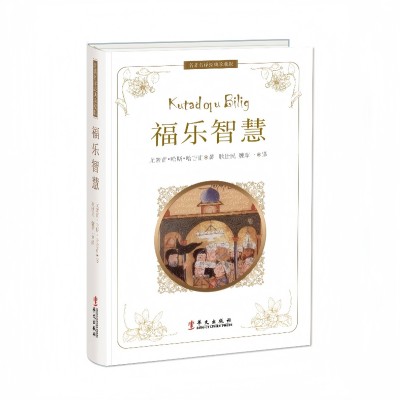
Title: Kutadgu Bilig
Author: Yusuf Khass Hajib
Translators: Geng Shimin, Wei Cuiyi
Publisher: Sino-Culture Press
Edition: The 1st edition in June 2018
Format: 16mo Binding: Soft hardcover
Printed Sheets: 20.5 Number of Words: 250,000
ISBN: 9787507549126
Price: 48.00 CNY
In the mid - 11th century, Kutadgu Bilig (originally named "Knowledge That Bestows Happiness"), a philosophical literary work of the Uyghur ethnic group in China, mainly expounds on the principles of governing a country as well as the author's own philosophical and moral thoughts. It uniquely creates four characters: the king "Sunrise", the minister "Full Moon", Full Moon's son "Wisdom", and the minister's clansman, the monk "Enlightenment". They respectively represent "Justice", "Fortune", "Wisdom", and "Contentment" (or "The Hereafter"). Through the dialogues among these four characters, the story clarifies the philosophical view of guiding people to happiness and establishing an ideal kingdom by means of the way of prospering and governing the country. It reflects the hope of the working people at that time that rulers would uphold justice, restrain greed, and enable the common people to live and work in peace and contentment. Kutadgu Bilig is a large - scale literary work written in Old Uyghur script. It is also a model work of the mature Uyghur literary language at that time. With a complete structure and grand scale, it contains narration, reasoning, profound and meaningful philosophical aphorisms, as well as vivid and detailed descriptions of scenery, thus possessing high aesthetic value.
Yusuf Has Hajib (1019 - 1092) was a famous poet during the Karakhanid Dynasty. He was born into a noble family in Balasaghun. Later, in order to pursue learning, he came to the capital of the dynasty, Kashgar (now Kashgar, Xinjiang), and studied at the Royal Islamic Seminary. In the middle of the 11th century, as the religious wars gradually subsided, Kashgar, the capital of the eastern dynasty, attracted a large number of literati and scholars from the western dynasty and various parts of Central Asia to visit, either for further study or to write books to gain fame, which greatly promoted the development of cultural undertakings in Kashgar. Yusuf Has Hajib was one of the most representative figures who became famous in Kashgar. He completed the large - scale classical narrative poem Kutadgu Bilig from 1069 to 1070 and dedicated it to Bughra Khan Arslan Hasan bin Sulaiman, and was bestowed the title of "Has Hajib" (reliable courtier).
Geng Shimin, a professor at Minzu University of China, is a paleo - Turkic philologist, Turkologist, and Uyghurologist. He graduated from the Department of Eastern Languages of Peking University in 1952. He is the first - generation national philologist in New China and the first person in China to study paleo - Turkic. He has translated and published 17 famous works such as Grammar of Ancient Turkic and History of Culture in the Western Regions written by world - renowned scholars in French, German, English, Japanese, Russian, etc. With millions of words of treatises and translations, he has been commended by domestic and international academic institutions for many times, achieving major breakthroughs in the study of ancient Turkic literature in China and winning honor and status for China in the international academic community.
Wei Cuiyi, a professor at Minzu University of China, is a paleo - Turkic philologist. His main translations include The Key to Truth and Kutadgu Bilig (co - translation).
Praise to Allah
Praise to the Prophet
Praise to the Four Companions of the Prophet
Praise to Spring and the Great Bughra Khan
On the Seven Stars and the Twelve Signs of the Zodiac
On the Dignity of Mankind Lies in Knowledge and Wisdom
On the Advantages and Disadvantages of Language
The Author of the Book Begs for Forgiveness
On Good Deeds and Their Benefits
On the Benefits of Knowledge and Wisdom
On the Meaning of the Book Title and Old Age
The Story Begins: About King Sunrise
Full Moon Comes to King Sunrise
Full Moon Pays Homage to King Sunrise
Full Moon Tells the King That He Represents Happiness
Full Moon Discusses Happiness with the King
King Sunrise Discusses Justice with Full Moon
King Sunrise Tells Full Moon What Justice Is
Full Moon Discusses Language and Its Benefits with the King
Full Moon's Message to His Son, Wisdom
Full Moon Advises His Son, Wisdom
Full Moon Leaves a Last Will to King Sunrise
King Sunrise Summons Wisdom
Wisdom Pays Homage to King Sunrise
Wisdom Takes Office under King Sunrise
On the Monarch
Wisdom on the Qualities a Minister Should Have
Wisdom on the Qualities a General Should Have
Wisdom on the Qualities a Close Attendant Should Have
Wisdom on the Qualities an Ilinqa Should Have
Wisdom on the Qualities a Minister of Finance Should Have
Wisdom Tells the King What Kind of Person Should Be Sent as an Envoy
Wisdom Tells the King about the Qualities of an Attendant
King Sunrise Writes a Letter to Enlightenment
Wisdom Goes to Enlightenment
The Dialogue between Enlightenment and Wisdom
Enlightenment Tells Wisdom about the Impermanence of This World
Wisdom Discusses This World and the Hereafter with Enlightenment
Enlightenment Writes a Letter to the King
King Sunrise Writes a Second Letter to Enlightenment
The Second Dialogue between Enlightenment and Wisdom
Wisdom Tells Enlightenment about Serving the Monarch
Wisdom Tells Enlightenment How to Treat Ordinary People
On How to Treat the Descendants of the Prophet
On How to Treat Scholars