






 BooksCLASSIFICATION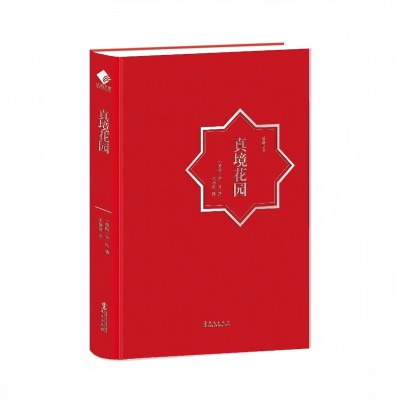
Title: Gulistan
Author: Sa'di (Persian)
Translator: Wang Jingzhai
Publisher: Huawen Publishing House
Edition: The 1st edition in July 2017
Printing: The 2nd printing in August 2022
Format: 16mo Binding: Hardcover
Printed Sheets: 17 Number of Words: 90,000
ISBN: 9787507547146
Price: 48.00 CNY
Gulistan is written in a combination of poetry and prose, following the artistic forms of Persian classical literature tradition. It prominently reflects the wishes and demands of the Muslim masses. At the same time, the work upholds justice and reveals the Islamic outlook on life and values. Since its publication more than 700 years ago, with its lofty spiritual realm, aesthetic value, and the vivid characters of all walks of life in the Middle Ages it portrays, it has had a huge impact in the fields of religion, history, and literature, becoming an immortal work beloved by people of all countries. It has exerted a positive influence on the moral promotion, spiritual cultivation, and philosophical analysis of Muslims of all ethnic groups.
Sa'di (1213 - 1291) was born in Shiraz, Persia. He received his early education in Baghdad and then delved into the study of Sufi philosophy. Since 1225, he started traveling around, making the pilgrimage to Mecca 15 times. His fame spread wherever his footsteps reached. After 30 years of long - term travel, he was captured when the Crusaders captured Jerusalem. In 1255, he was redeemed by an Arab merchant and returned to Shiraz, and the merchant married his daughter to Sa'di. Sa'di was good at literature, with a novel writing style that was both solemn and humorous, actually pioneering the modern humorous genre. Therefore, his works were highly esteemed by the world. He had about 22 works in his lifetime, with Bustan and Gulistan being the most famous. His short elegies were unparalleled. Works titled "garden" mostly contain fables and philosophies, or are humorous texts; those titled "orchard" are mostly in poetic form, aiming at education. Sa'di's writing style has been a model of Persian literature for hundreds of years. His works have had a great influence on later generations and have been translated into dozens of foreign languages. Sa'di holds a lofty position in the history of Persian literature. He is recognized as one of the four pillars supporting the edifice of Persian literature.
Wang Jingzhai (1879 - 1949), whose given name was Wenqing and was known by his courtesy name, was from Tianjin. He was a famous Islamic classicist, writer, translator, and scholar in modern and contemporary China. He was known as one of the "Four Great Imams" in modern Chinese Islamic history, along with Da Pusheng, Ha Decheng, and Ma Songting. Wang Jingzhai dedicated his life to the academic research of Islam and the translation of Islamic classics. He had an extremely rich collection of translations and was hailed as the "Master of Islamic Classics in Modern China" and the "Imam with a comprehensive knowledge of ancient and modern, Chinese and foreign, and excellent character and learning." His translation The Interpretation of the Quran was painstakingly translated over more than 20 years, with the manuscript revised four times. It was published in three different styles - classical Chinese, Islamic school language, and vernacular Chinese as the A, B, and C versions of The Interpretation of the Quran. His other translations include Distinguishing between Islam and Christianity, Central Asian Dictionary, A New Chinese - Arabic Bilingual Dictionary, Preface to Umda, A Selected and Detailed Translation of al - Wiqayah, The Garden of Truth, as well as memoir articles such as My Fifty - Year Study Autobiography, My Little History of Translating the Classics, as well as Materials on Modern Chinese Islamic Culture History, The Necessity of Promoting Islamic Culture, Travel Notes of Pilgrimage, etc.