






 BooksCLASSIFICATION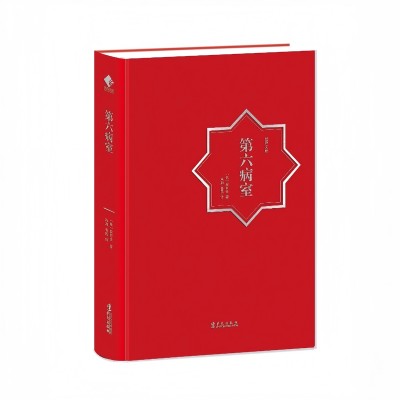
Title: Ward No. 6
Author: Anton Chekhov (Russian)
Translators: Feng Jia, Lu Min
Publisher: Sino-Culture Press
Publication Date: January 2022
Format: 16-mo
ISBN: 9787507554922
Price: 68.00 CNY
This book is a collection of Chekhov's short and medium stories named Ward No. 6 and compiled by Feng Jia and Lu Min, which includes 49 masterpieces of Chekhov. Ward No. 6 (1892) is one of them and can be regarded as a masterpiece among Chekhov's works. It describes a hospital in a remote small town in the province. Ward No. 6 is the ward for psychiatric patients in it. The situation in the hospital is in a mess. The janitor Nikita, like a prison guard, randomly mistreats and beats the patients. The hospital withholds the patients' rations and corruption prevails. The chief doctor, Ragin, has been working here for more than 20 years. He is very dissatisfied with the situation in the hospital, but due to a lack of perseverance and determination, he can only stand by and let things take their course, maintaining the status quo. Tolstoy's theory of "not resisting evil by force" has become Ragin's spiritual pillar. He has become gentle, fragile, content with whatever he has and submissive, completely compromising with the dark reality.
One day, when Ragin was on duty and inspecting the ward, he got to know the patient Gromov. Since Ragin often chatted with the patients in Ward No. 6 and was usually withdrawn, people around him suspected that he was crazy. Ragin's assistant, Khobotov, had long coveted Ragin's position. He skillfully took advantage of people's suspicion of Ragin and locked Ragin in Ward No. 6 as a madman. Behind the solid iron bars, Ragin was severely beaten by Nikita and had a stroke and died the next day.
With great artistic generalization, Chekhov compressed the picture of autocratic Russian life into the small Ward No. 6. The image of Ragin he created has a warning effect. The image of Gromov, the "mad" fighter he focused on shaping, is of even greater significance. Although the author did not point out the way to break out of Ward No. 6, he shouted out the slogan of struggle through Gromov's mouth, making people look forward to the bright future: "The dawn of a new life will shine on the earth, and truth will prevail. People will take to the streets and cheer!"
Generally speaking, Chekhov's novels have a large number of readers in China. There are countless translations. This year also marks the 160th anniversary of Chekhov's birth. We are republishing Chekhov's classic works. While commemorating this literary giant in the world literary arena, we hope that the classics will be passed down forever and that reading his works will bring us more pleasure, surprises and edification.
Anton Chekhov (1860 - 1904), whose full name is Anton Pavlovich Chekhov, was a great critical realist writer with world reputation in Russia in the late 19th century, a master of humor and satire, a great master of short stories and a famous playwright. He was as famous as Maupassant in short stories. Together with Mark Twain, they are known as the world's three "kings of short stories".
He created seven or eight hundred short stories in his life and also wrote some medium-length novels and plays. Most of his works are based on the ordinary lives of "little people" in the middle class, exposing the brutality of the reactionary ruling class and criticizing the autocratic system of the Tsar. His main works include The Chameleon, A Boring Story, The Duel, The Steppe, Peasants, In the Ravine, The Seagull, Sorrow, Misery, Uncle Vanya, The Man in a Case, Sergeant Prishibeyev, Ward No. 6, The Death of a Government Clerk, etc.
Feng Jia, whose real name is Feng Jiazhen, was born in Yixing, Jiangsu Province in 1932. He studied in Heqiao Primary School, Suzhou Middle School and the Department of Russian Language and Literature at Peking University. After graduating from university, he remained in the department until his retirement. He has a passion for literary translation. His main translations include The Insulted and the Injured, The Chameleon, Krylov's Fables, Farewell, Gulliver!, The Guillotine, Mumu, The Fate of a Man, etc.
Lu Min, born in 1935, graduated from the Department of Russian at Peking University and has been engaged in the editing of foreign literature books for many years. He is a member of the China Writers Association.