






 BooksCLASSIFICATION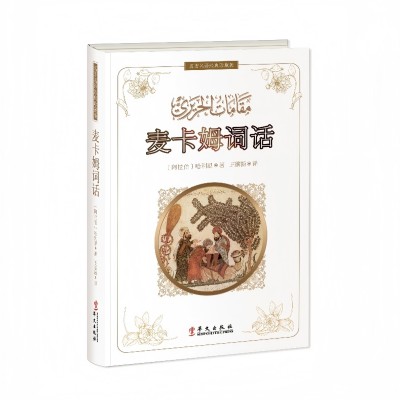
Title: Maqamat of al-Hariri
Author: al- Hariri (Arabian)
Translator: Wang Dexin
Publisher: Sino-Culture Press
Edition: 1st Edition, October 2017
Format: 16 - mo, Soft Hardcover
Printed Sheets: 21.25
Word Count: 250,000 words
ISBN: 9787507547566
Price: 58.00 CNY
Maqamat is a unique literary genre created by ancient Arab literati. Its original Arabic meaning is "assembly", which later extended to "speech" or "sermon" in the assembly. It is a narrative text combining rhymed prose and poetry, similar to the parallel prose in ancient China, aiming to showcase the author's writing skills. Later, it gradually spread among the people. Artists added melodies to it, using the form of storytelling and singing to relate historical events, similar to the Chinese ballad - singing and storytelling with drum - beating. For example, the Uyghur epic of song and dance storytelling "Twelve Muqams" popular in Xinjiang is a variation of Maqamat that spread to China.
In Maqamat of al-Hariri, the protagonist is Abu Zayd al - Siraji, a talented and resourceful literary beggar. The 50 stories in the whole book are carefully set by the author in different regions, occasions, and among different groups of people, vividly demonstrating his literary talent and wisdom. In almost every story, there are long passages of his impromptu recitations, showing his ability to speak eloquently and come up with witty remarks. His tongue is his most powerful weapon, and his eloquence is his most effective remedy. Everyone, from high - ranking officials and nobles to ordinary people, is enchanted and impressed by him.
Al-Hariri (1054 - 1122) was a renowned litterateur and linguist in the Abbasid Caliphate of Arabia. His full name is Abu Muhammad al - Qasim ibn Ali ibn Muhammad ibn Uthman al - Hariri. He was born into a Muslim silk - merchant family in Basra, present - day Iraq. Since childhood, he studied language, rhetoric, literature, history, and Islamic doctrine from famous teachers in Basra. Later, he held positions in news and intelligence in the Abbasid court while devoting himself to literary creation. In 1103, he began to imitate Badr al - Zaman al - Hamadhani in creating "Maqamat". While imitating the old "Maqamat" genre, he further explored, transformed, and innovated it, turning it into parallel prose and forming a perfect "Maqamat" literary genre. Besides Maqamat of al-Hariri, he also wrote the long poem on Arabic grammar The Wonders of Grammatical Analysis and books about incorrect examples of Arabic expressions. He studied, analyzed, and highly praised the grammar, rhetoric, and rhythm of the Quran. He had profound attainments in Arabic linguistics and prosody, and was honored as "a star of the Arab literary world" and "an outstanding figure of the Basra school of language".
Wang Dexin was born in 1942. He graduated from the Arabic Department of Beijing Foreign Studies University. He successively taught at Beijing International Studies University, Beijing Language and Culture University, and Dalian University of Foreign Languages. He participated in the compilation of A Concise Arabic - Chinese Dictionary. He has published numerous papers and translations in domestic core journals and has profound knowledge in Arab culture and literature. He once served as a seconded translator and Chinese teacher in Yemen, and as a visiting professor and graduate supervisor at the Chinese Department of the Faculty of Languages, Ain Shams University in Cairo, Egypt.