






 BooksCLASSIFICATION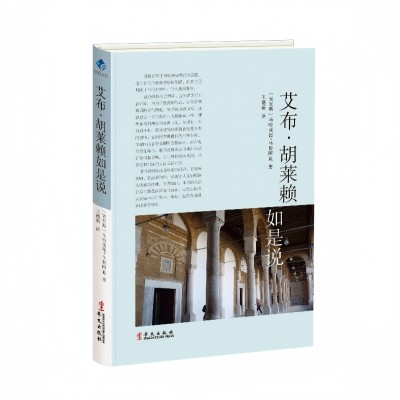
Title: Abu Hurairah Said
Author: Mahmoud Messadi (Tunisian)
Translator: Wang Dexin
Publisher: Sino-Culture Press
Edition: First Edition, January 2018
Format: 16 - mo, Soft - bound Hardcover
Printed Sheets: 7
Word Count: 45,000 words
ISBN: 9787507547979
Price: 28.00 CNY
Abu Hurairah Said is a representative work of Mahmoud Messadi. Through this book, the author hopes to explore a path to the true nature of life, aiming to return to the lost origin of life: a sincere desire to understand one's own essence and a way to cultivate humanism from the wild primitive self.
In the book, the first - person narrator "I" echoes the voice within: life is nothing but a state of existence, yet it is also a kind of helplessness and a tragedy. Once it retreats to a certain appearance, or appears in a state of peace and contentment, it must have been damaged, and it is cursing the fabricators of life. The author hopes that readers can also experience a spiritual baptism like the "I" in this book. If they can do so, existence means striving and obtaining, without exception.
This book, through the words of Abu Hurayrah, describes the irreconcilable conflict between the spirit and the body in life, suggesting that human existence is a meaningless being. After attempting to purify the soul by torturing the body in a monastery but ultimately failing, the protagonist realizes that the spirit and the body are interdependent. In despair, facing the setting sun, he jumps off a cliff to end the suffering of the body. Some scholars analyze that the purpose of the author's writing is to symbolically illustrate the confusion, contradictions, pain, and helplessness of intellectuals in the pursuit of truth. If this is indeed the case, the author's writing technique is truly exquisite.
Mahmoud Messadi is a renowned modern Tunisian writer and playwright. He was born into a scholarly family in the town of Tazrka in Nabeul Governorate, Tunisia. Before starting primary school, he had already learned to recite the Quran in the local private school. After graduating from high school, he went to study in France. After returning to his home country, he taught for a while. Later, he held various positions such as magazine editor - in - chief, Minister of Education, Minister of Culture, and Speaker of the Parliament. He also served in UNESCO and other international and regional organizations. With a profound foundation in Arabic language and literature and having received a Western education, he has a broad knowledge of both ancient and modern times, and is well - versed in both Eastern and Western cultures. He is not only familiar with Arab - Islamic culture but also well - acquainted with European philosophical and literary schools. He is one of the most influential writers in the Tunisian literary scene in the 20th century. His main representative works include the novel The Birth of Oblivion and the existentialist philosophical play The Dam.
Wang Dexin was born in 1942. He graduated from the Arabic Department of Beijing Foreign Studies University. He has taught at Beijing International Studies University, Beijing Language and Culture University, and Dalian University of Foreign Languages successively. He participated in the compilation of the Concise Arabic - Chinese Dictionary. He has published numerous papers and translations in domestic core journals and has profound attainments in Arab culture and literature. He has served as a seconded translator and Chinese teacher in Yemen, and as a visiting professor and postgraduate supervisor in the Chinese Department of the Faculty of Languages at Ain Shams University in Cairo, Egypt.
One Hundred and One Poems / 001
The Beginning of Resurrection
Between Jest and Earnest
Making Friends over Wine
Rebirth
Feelings
Abandonment (I)
Abandonment (II)
Longing
Between Truth and Falsehood
Desire
Clay
Dog
Greed
Loneliness
The Blind
Patience
The Unattainable Netherworld
Fearlessness
Ghostly Shadows
The Wise Man
Stiff Rock
The End of Resurrection