






 BooksCLASSIFICATION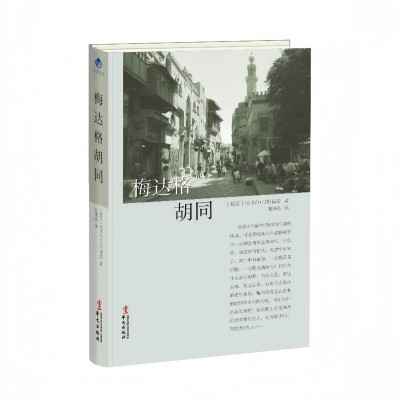
Title: Midaq Alley
Author: Naguib Mahfouz (Egyptian)
Translator: Zhi Puhao
Publisher: Sino-Culture Press
Edition: First Edition, July 2018
Format: 16 - mo, Soft - bound Hardcover
Printed Sheets: 19.5
Word Count: 170,000 words
ISBN: 9787507548983
Price: 48.00 CNY
Published in 1947, Midaq Alley is a representative realist novel by Naguib Mahfouz. It mainly depicts the events that took place in an alley in Cairo at the end of World War II. During World War II, Egypt was an important British strategic base in the Middle East, and the "Middle East Supply Centre" serving the Allied forces was located here. The Egyptian economy was incorporated into the wartime track, leading to serious abnormal development. Agriculture declined, materials were scarce, prices soared, and the living standards of the working people continued to deteriorate, giving rise to various social problems. In this alley, there lived all kinds of residents: a barber, the father - son owners of a coffee shop, a bread - shop couple, a matchmaker and her daughter, a dentist "doctor", a landlady, peddlers, devout religious believers, frustrated literati wandering all day long, people who made beggars appear disabled, and a wealthy merchant who opened a store in the alley... This was a typical underclass society. The story unfolds through the intricate relationships among these characters and their connections with the outside world. Through the description of Hamida's degradation, Abbas's tragic death, Hussein's disillusionment, as well as the behaviors, psychologies, morals, and distorted souls of other diverse characters, the author truthfully and vividly reflects the sufferings of the Egyptian people at that time, exposes various ugly social phenomena, and lodges a complaint against Western colonialists.
Naguib Mahfouz is an Egyptian writer and the most renowned novelist in the contemporary Arab world. In 1988, he was awarded the Nobel Prize in Literature, becoming the first Arabic - speaking writer to receive this honor. The reason for the award was that "through his numerous minutely drawn works, all - seeing realism, and the inspiration of ambition, he has formed an Arabic art of expression that is appreciated by all mankind." The first three historical novels he published, The Mockery of Fate, Radubis (also translated as The Courtesan and the Pharaoh), and The Battle of Abydos, all express patriotism. From the 1940s to the 1950s, Mahfouz was in the stage of realist creation, during which he published four novels exposing social darkness and calling for social change: New Cairo, Khan al - Khalili, Midaq Alley, and Beginning and End. The trilogy that marks the peak of his novel - writing, Palace Walk, Palace of Desire, and Sugar Street, is widely recognized as a milestone in the history of Arab novels. In addition, he also published works such as The Thief and the Dogs, The Search, The Beggar, Conversations on the Nile, The Children of Our Alley, The Harafish, and Arabian Nights and Days.
Zhi Puhao, with the pen names Yani and Shalian, is a researcher at the Institute of Foreign Literature, Chinese Academy of Social Sciences. He graduated from the Department of Oriental Languages at Peking University in 1964 and further studied at the University of Damascus and Cairo University successively. He once served as the director of the Department of Oriental Literature at the Institute of Foreign Literature, Chinese Academy of Social Sciences, an adjunct professor at the Center for Oriental Literary Studies of Peking University, a member of the "National Society for Translation, Research, and Documentation" in Tunisia, the vice - president of the Chinese Association for Arab Literature, and a member of the Chinese Writers Association. His monographs include Reading Arabian Literature, Myth and Reality: On One Thousand and One Nights, etc. His translations include A History of Arab Literature, Midaq Alley, People of the Sun, One Thousand and One Nights, etc.