






 BooksCLASSIFICATION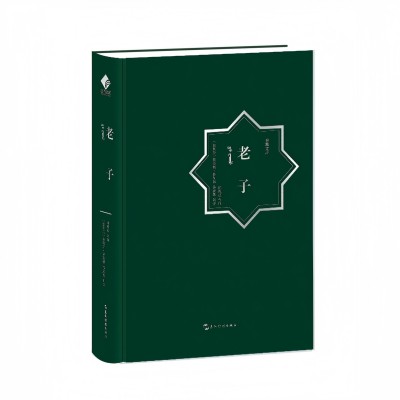
Title: Laozi: Chinese - Arabic
Modern Chinese Translator: Chen Guying
Arabic Translators: Firas Sawah (Syrian), Xue Qingguo
Publisher: China Intercontinental Press
Publication Date: June 2021
Format: Hardcover, 16 - mo
ISBN: 9787508546919
Price: 68.00 CNY
Laozi is a philosophical work by Laozi during the Spring and Autumn Period. It is a pre - Qin work before the division of the various philosophical schools in ancient China and an important source of Taoist philosophical thought. We have specially invited well - known domestic and foreign research experts to provide detailed annotations and excellent translations of this book, enabling more foreign readers to access, understand, and ultimately fall in love with this Chinese philosophical classic, which consists of only about five thousand characters.
The book Laozi consists of eighty - one chapters, mostly in rhymed verses. It is divided into two parts: the "Tao Te Ching" (the chapters on the Way) and the "De Ching" (the chapters on Virtue), so it is also known as the Tao Te Ching. It is one of the famous ancient Chinese classics. Standing parallel to Zhuangzi like twin peaks, it is a representative work of the pre - Qin Taoist school. The five - thousand - character Laozi focuses on elaborating the Tao of Heaven, which serves as the ontological essence of the universe, the origin of all things, and the law of motion. It applies this concept of the Tao of Heaven to examine human affairs, guiding governance and self - cultivation. It directly addresses real - world society, covering various aspects of the universe, nature, society, and human life. It constructs a unique theoretical system with simple dialectical thinking.
Chen Guying is an internationally renowned scholar of Taoist culture. He was born in Changting, Fujian in 1935. In 1949, he went to Taiwan with his parents. From 1956 to 1963, he studied at the Department of Philosophy and the Institute of Philosophy at National Taiwan University, under the guidance of renowned philosophers Fang Dongmei and Yin Haiguang. In 1973, due to his participation in the Diaoyu Islands Protection Movement on the NTU campus and his publication of current affairs comments, he was dismissed by the authorities, triggering the well - known "NTU Philosophy Department Incident" that lasted for about two years. In 1979, he left Taiwan for the United States and served as a researcher at the University of California, Berkeley. In 1984, he took a position at Peking University. In 1997, National Taiwan University rehabilitated him, and he returned to teach at NTU until his retirement. After retirement, he also taught at the Department of Philosophy of NTU and Chinese Culture University. Since 2003, he has been lecturing on "Research on Taoist Thought" at the Institute of Confucian Classics at National Kaohsiung Normal University. Since 2010, he has been employed as a "Humanities Distinguished Professor" at the Department of Philosophy of Peking University. His works, Annotations, Translations, and Commentaries on Laozi and Contemporary Annotations and Translations of Zhuangzi, have been on the market for over forty years and have become classic reading materials for people to study Laozi and Zhuangzi. He proposed that the philosophical thought of the Book of Changes belongs to Taoism, going against the two - thousand - year - old view that the thought of the Book of Changes belongs to Confucianism. His proposition of "Taoism as the main trunk of Chinese philosophy" has had an increasingly wide - reaching influence. The Humanistic Spirit of Taoism won the "Sub - category Scholarship Award" at the Global Chinese Sinology Ceremony.
Firas Sawah: Born in Homs, Syria in 1941, he is a member of the Syrian Writers' Association and is currently a full - time writer at Aladdin Publishing House. Firas is a renowned scholar in the Arab world. His first monograph, The First Adventure of Reason, was published in 1976, causing a sensation in Syria and even the entire Arab cultural community. To date, he has published 31 works, with numerous achievements in the fields of comparative religion, and the study of Eastern thought and mythology. He has won the Historical Heritage Research Award issued by the Supreme Council for Culture of Kuwait (1996), the Annual Cultural Figure Award at the Amman Cultural Festival in Jordan (2002), and the Cultural Contribution Award of the Trimur Cultural Foundation in Syria (2018). From August 2012 to July 2018, he taught at the Arabic School of Beijing Foreign Studies University for six years.
Xue Qingguo: Born in Hefei, Anhui Province in 1964. He is currently a professor and doctoral supervisor at the Arabic School of Beijing Foreign Studies University, the director of the Zayed Center for Arabic and Islamic Studies, a member of the Chinese Writers Association, the vice - president of the Chinese Association for Arab Literature, and an executive member of the Middle East Society. He is mainly engaged in teaching, research, and translation in the fields of modern Arabic literature, culture and thought, and the history of Arabic thought. He has published more than 20 works of various types, and his translations of works by Arab literary masters such as Adonis, Mahmoud Darwish, Kahlil Gibran, and Naguib Mahfouz are widely loved by Chinese readers. He often writes articles in mainstream media in the Arab world to express the voices of Chinese scholars. In 2014, he won the Outstanding Translator Award in Anhui Province, and in 2017, he won the Qatar "Sheikh Hamad Award for Translation and International Understanding", the most important translation award in the Arab world.