






 BooksCLASSIFICATION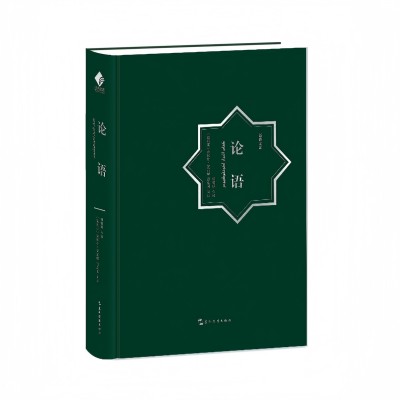
Title: The Analects: Chinese - Arabic
Modern Chinese Translator: Yang Bojun
Arabic Translators: Firas Sawah (Syrian), Xue Qingguo
Publisher: China Intercontinental Press
Publication Date: June 2021
Format: Hardcover, 16 - mo
ISBN: 9787508546896
Price: 68.00 CNY
The base text used in this book is The Analects: Annotations and Translations published by Zhonghua Book Company, a masterpiece by an esteemed scholar. Based on his in - depth study of The Analects of Confucius, Mr. Yang Bojun provided precise and meticulous annotations and translations for the twenty chapters of The Analects. Each chapter is divided into three parts: the original text, annotations, and translation. The annotations are accurate, and the translation is smooth and easy to understand. This not only provides several research clues for professional researchers but also facilitates the correct understanding of The Analects for ordinary readers. It is truly an excellent work suitable for both refined and popular tastes.
The Analects is a collection of aphorisms and an ideological and prose work. Its main content was initially created during the period when Confucius established a teaching platform in the late Spring and Autumn Period. After Confucius' death, his disciples and their disciples passed on his sayings from generation to generation and gradually recorded these orally - recited words, deeds, and sayings. Eventually, they were compiled into a book in the early Warring States Period, thus the term "Lun" (meaning compilation). The Analects mainly records the words and deeds of Confucius and his disciples, so it is called "Yu" (meaning words).
Confucius' thought takes self - cultivation as the starting point. The primary condition for a person to establish themselves in the world is to possess the "gentleman" personality. A gentleman has a heart of benevolence, self - respect, and self - discipline; is consistent in appearance and inner self, and in words and deeds; is proactive, with both virtue and talent; is diligent in learning and attaches importance to practice; is content with poverty and adheres to justice, etc. A gentleman always adheres to the way of getting along among people, follows different ethical relationships, and constructs a harmonious and friendly interpersonal and social environment.
Yang Bojun (1909 - 1992) was a linguist. His original name was Yang Dechong, and he was from Changsha, Hunan Province. He graduated from the Chinese Department of Peking University in 1932. Later, he successively held positions such as a middle - school teacher, a member of General Feng Yuxiang's research office, a lecturer at Sun Yat - sen University in Guangdong, the president of Hunan Minzhu Daily, the director of the Secretariat of the Hunan Provincial Political Consultative Conference, the director of the Office of the United Front Work Department of the Hunan Provincial Committee of the Communist Party of China, an associate professor at the Chinese Department of Peking University, an associate professor at the Chinese Department of Lanzhou University, an editor at Zhonghua Book Company, and a member of the Chinese Linguistics Society. His contributions in the field of language and writing are mainly reflected in the research on ancient Chinese grammar and function words, as well as the collation and translation of ancient books.
Firas Sawah: Born in Homs, Syria in 1941, he is a member of the Syrian Writers' Association and is currently a full - time writer at Aladdin Publishing House. Firas is a renowned scholar in the Arab world. His first monograph, The First Adventure of Reason, was published in 1976, causing a sensation in Syria and even the entire Arab cultural community. To date, he has published 31 works, with numerous achievements in the fields of comparative religion, and the study of Eastern thought and mythology. He has won the Historical Heritage Research Award issued by the Supreme Council for Culture of Kuwait (1996), the Annual Cultural Figure Award at the Amman Cultural Festival in Jordan (2002), and the Cultural Contribution Award of the Trimur Cultural Foundation in Syria (2018). From August 2012 to July 2018, he taught at the Arabic School of Beijing Foreign Studies University for six years.
Xue Qingguo: Born in Hefei, Anhui Province in 1964. He is currently a professor and doctoral supervisor at the Arabic School of Beijing Foreign Studies University, the director of the Zayed Center for Arabic and Islamic Studies, a member of the Chinese Writers Association, the vice - president of the Chinese Association for Arab Literature, and an executive member of the Middle East Society. He is mainly engaged in teaching, research, and translation in the fields of modern Arabic literature, culture and thought, and the history of Arabic thought. He has published more than 20 works of various types, and his translations of works by Arab literary masters such as Adonis, Mahmoud Darwish, Kahlil Gibran, and Naguib Mahfouz are widely loved by Chinese readers. He often writes articles in mainstream media in the Arab world to express the voices of Chinese scholars. In 2014, he won the Outstanding Translator Award in Anhui Province, and in 2017, he won the Qatar "Sheikh Hamad Award for Translation and International Understanding", the most important translation award in the Arab world.