






 BooksCLASSIFICATION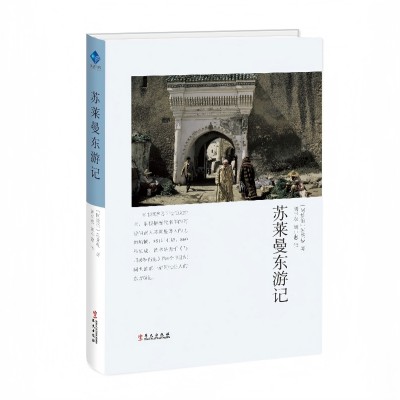
Title: Voyage du marchand arabe Sulaymân en Inde et en Chine
Author: Sulaiman (Arabian)
Translators: Liu Bannong, Liu Xiaohui
Publisher: Sino-Culture Press
Edition: 1st Edition, November 2015
Printing: 3rd Printing, August 2022
Format: 16 - mo Binding: Hardcover
Printed Sheets: 8.5 Word Count: 60,000 characters
ISBN: 9787507543810
Price: 38.00 CNY
The cultural exchanges between China and Arab countries have a history of thousands of years. In the new historical era, with the proposal of the national strategies of the "Silk Road Economic Belt" and the "21st - Century Maritime Silk Road", the cultural exchanges between China and Arab countries have become more active and colorful. The Travels of Sulaiman to the East, translated by Liu Bannong, a modern Chinese scholar, and his daughter Liu Xiaohui, is an important work for studying the ancient Silk Road and the history of Sino - Western communication. According to the publication plan of our "Silk Road Library", this translated work is now re - introduced to readers.
This book is the earliest Arabic work recording information about China. Chinese historians Fan Wenlan and Bai Shouyi also cited the travel notes in their works. Liu Bannong, a renowned linguist and writer in China, and his daughter Liu Xiaohui translated this book from French into Chinese in 1927. Nearly one - third of the book describes the politics, economy, culture, and customs of the Tang Dynasty in China. It mentions China's vast territory, hard - working people, the prosperity of Chang'an (the capital city), the exquisite silk and ceramic craftsmanship, the developed culture, and the respect for Muslim customs. The translators have played a historical bridging role in strengthening cultural exchanges among people of various countries and promoting the development of world civilization, which is worthy of our admiration and commemoration.
Liu Bannong (1891 - 1934), with the given name Fu and the style name Bannong, was from Jiangyin, Jiangsu Province. He was a famous writer, linguist, and educator in modern Chinese history. He was one of the pioneers of the "May 4th" New Culture Movement and participated in the editorial work of New Youth in his early years. In 1917, he was hired as a Chinese teacher by Cai Yuanpei, the president of the former National Peking University. In 1920, Liu Bannong went to study at the University of London in the UK and the University of Paris in France. After returning to China, he resumed his position as a professor at Peking University, teaching phonetics, and established China's first phonetic and musical rhythm laboratory. In 1927, he organized China's first "Northwest China Scientific Expedition Team".
Liu Bannong had a prolific life in terms of writing. He created The Whip - Waving Collection and The Earthenware Pot Collection, compiled The Manuscript of Early Vernacular Poems, and wrote academic works such as General Theory of Chinese Grammar and Experimental Records of the Four Tones. In 1925, he compiled Selected Works from Dunhuang, China's first work on Dunhuangology along the Silk Road. The Travels of Sulaiman to the East is the only work translated in collaboration by Liu Bannong and his daughter.
In 1920, when he was studying in the UK, he created the vernacular poem How Can I Not Think of Her, which was composed by Zhao Yuanren, a phonetician who was also studying in Europe at that time. Subsequently, this song became popular in China and has been passed down to this day. The character "她" (she) was first created by Liu Bannong as a female pronoun, and he also created the character "它" (it) to represent inanimate objects.
In the summer of 1934, during the summer vacation, Liu Bannong led students to Inner Mongolia and other places to investigate folk customs and dialects. Unfortunately, he contracted a serious illness. After returning to Beijing while ill, he passed away soon.
Liu Xiaohui (1916 - 1998), the eldest daughter of Liu Bannong, was a foreign - language educator and translator. She was from Jiangyin, Jiangsu Province, and was born in Shanghai. She taught at Shanghai International Studies University for 25 years and was proficient in several foreign languages such as English, French, and Italian.
In the summer of 1956, Liu Xiaohui started working at Shanghai International Studies University. She taught French and Italian courses, lectured on literature, supervised postgraduate students, compiled teaching materials, and set examination questions. She participated in the compilation of A Comprehensive English - Chinese Dictionary by Shanghai Translation Publishing House. She translated foreign films such as Such Is Life and Go Home for the Shanghai Film Dubbing Studio, as well as popular science films like Chinese Silk and Replantation of Severed Limbs. She also dubbed many films for overseas release, such as The Peacock Princess and The Galaxy of Shaoshan. She retired from Shanghai International Studies University in 1981.
From 1982 to 1984, Liu Xiaohui continued to translate foreign masterpieces, and she accepted interviews and invitations from many magazines, writing articles introducing her father, Liu Bannong. The magazines included New Culture Historical Materials, Popular Photography, and Translation Newsletter. In 1985, she emigrated to the United States. In 1994, she wrote her memoir My Father Liu Bannong and passed away in 1998.
Introduction to Translator Liu Bannong
Introduction to Translator Liu Xiaohui
Preface 1
Preface 2
Navigation Routes of Arabs to the East from the 9th - 10th Century
Volume 1: The Chain of Stories
News about India, China, and Their Kings
Volume 2: News about China and India
Records of the City of Java
Continued News about China
Some Insights about India
The Place of Sangao
Amber
Pearls
Other Legends about India
Postscript
……