






 BooksCLASSIFICATION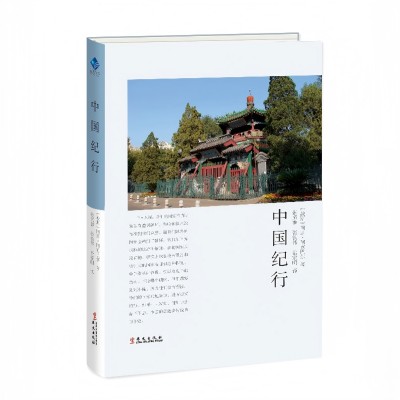
Title: Khatay-nama
Author: Ali Akbar (Persian)
Translators: Zhang Zhishan, Zhang Tiewei, Yue Jiaming
Publisher: Sino-Culture Press
Edition: 1st Edition, January 2016
Printing: 3rd Printing, August 2022
Format: 16 - mo Binding: Hardcover
Printed Sheets: 19 Word Count: 220,000 characters
ISBN: 9787507544633
Price: 58.00 CNY
Khatay-nama is part of Huawen Publishing House's "Silk Road Library: Collection of Books on the History of Sino - Foreign Relations". This book comprehensively and systematically introduces various aspects of Chinese society at that time, complementing the information lacking in Chinese historical records. It played a certain role in helping Western Asians understand China at that time and has important documentary value. There are Persian manuscripts in Cairo and Paris. It was first discovered in the archives of the Topkapi Palace in Istanbul in the 19th century. It has been successively translated into Turkish, German, English, etc., and has received widespread attention and research from both Western and Eastern scholars. It is regarded as the only comprehensive description of China between The Travels of Marco Polo in the 13th century, The Travels of Ibn Battuta in the 14th century, and the reports on China by Jesuit missionaries in the second half of the 17th century.
This book is a travelogue written by a Persian in the 16th century, systematically introducing the situation of Chinese society. It is the only known Persian ancient book about China so far. It was completed in 1516 (the 11th year of Zhengde, Emperor Wuzong of the Ming Dynasty) in Istanbul, the capital of the Ottoman Empire, and was successively presented as a gift to Sultan Selim I of Turkey (1470 - 1520) and Suleiman Shah (1496 - 1566). The whole book consists of 21 chapters and is a record of the author's travels in China in 1500 (the 13th year of Hongzhi, Emperor Xiaozong of the Ming Dynasty). The book vividly and interestingly describes China's provinces, military, laws, economic management, urban construction, history, geography, culture and art, court etiquette, religious beliefs, social customs, etc. Out of his Muslim religious feelings, the author devotes a relatively large amount of space to focusing on the situation of Islam in Ming - dynasty China, records the social life and religious activities of Muslims, summarizes the contributions of Muslim civil and military officials, who were highly valued by the Ming emperors, to the founding of the Ming Dynasty. It also points out that while the Ming rulers venerated Buddhism, they adopted a policy of inclusiveness towards Islam, and that the son of Emperor Jingtai converted to Islam.
Zhang Zhishan (1926 - 2007) was from Siyang, Jiangsu Province. He graduated from the Department of Physics of Fu Jen Catholic University in 1947 and from the research department of the Department of Physics of Peking University in 1955. He successively served as a lecturer, associate professor, professor, and director of the Nuclear Electronics Teaching and Research Section of the Department of Technical Physics at Peking University, director of the Electronics Research Section of the Institute of High - Energy Physics of the Chinese Academy of Sciences, professor, director of the Department of Radio Electronics, and director of the Institute of Modern Educational Technology at Beijing Normal University. He was engaged in the research of electronic experimental technology and electronic instrument systems for a long time and made contributions to cultivating electronics talents and establishing China's high - energy physics fast - electronics research institutions.
Zhang Tiewei was born in Siyang County, Jiangsu Province in 1933. After graduating from university in 1958, he engaged in translation, editing, and foreign publicity work. He specialized in Middle East and Iranian research at the Institute of West - Asian and African Studies of the Chinese Academy of Social Sciences and served as the secretary - general of the China Middle East Society. He participated in writing some entries in the Foreign History Volume of Encyclopedia of China, the Iranian entries in Concise Encyclopedia of West Asia and North Africa, and some chapters in Middle East Handbook and The Pattern of the Middle East after the Gulf War. He published many papers such as Iran after Khomeini and wrote Countries and Their History: Iran.
Yue Jiaming graduated from the Persian Department of the East Asian Languages Department of Peking University in 1974. From 1974 to 1989, he engaged in translation work in the Persian group of China Radio International (during which he was sent by the radio station to study at the University of Tehran for two years). From 1989 to 1991, he was seconded to the Tehran representative office of China National Machinery & Equipment Import & Export Corporation. Since 1991, he has been engaged in business.
Preface by Dr. Joseph Needham
Preface by Professor Ji Xianlin
The Enlightenment of A Journey to China and the Compilation Process of the Chinese Translation / Zhang Zhishan
Eulogy - Hymn - The Story of the Cup of Illumination
Foreword
Prologue
The Division of the World
Description of the Journey between Iran and Turan
The Road to China
The Religious Beliefs of the Chinese People
Supplementary Chapter: The Situation of the Chinese Emperor Leaving the Palace Each Year
Towns and Forts
The Garrison in the City
Warehouses
The Kingdom of Sadat
The Situation of Chinese Prisons
The Annual Festival of the Chinese People after the Severe Winter
The Twelve Provinces of China
Banquets and Etiquette
Brothels and Prostitutes
Wonderful Crafts
The Legislators of China
Schools
People from All over the World
On the Oirats
On Chinese Agriculture
The "Kaaba" of China
On Gold, Silver, Copper Coins, and Paper Money
The Law - abiding Spirit of the Chinese People
The Chinese Painting Academy
Epilogue
Appendix: International Research on A Journey to China