






 BooksCLASSIFICATION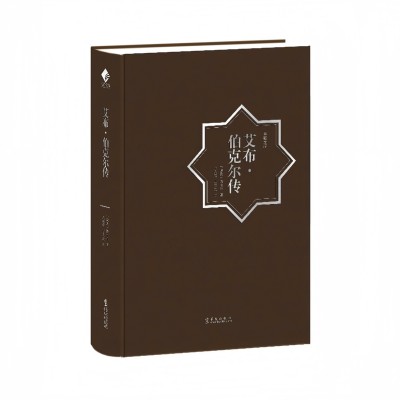
Title: The Biography of Abu Bakr As-Siddeeq
Author: Mohammed Hussein Heikal (Egyptian)
Translator: Wang Yongfang, Wang Maohu
Publisher: Sino-Culture Press
Edition: 1st Edition, October 2015
Printing: 4th Printing, August 2022
Format: 16 - mo Binding: Hardcover
Printed Sheets: 15 Word Count: 150,000 characters
ISBN: 9787507544312
Price: 48.00 CNY
After the death of the Prophet Muhammad of Islam in 632 AD, within the next 30 years, the Arab Muslim community organization had four "Caliphs" (Khalifah) who successively held the religious and political power of the Arab - Islamic state. "Caliph" means "the successor of the Messenger of Allah". This marked the beginning of the early historical stage of Islam, known as the period of the Four Caliphs, also called the era of the Rightly - Guided Caliphs.
The first four Caliphs were elected by the Muslim community. They were Abu Bakr (reigned from 632 - 634 AD), Umar ibn al - Khattab (reigned from 634 - 644 AD), Uthman ibn Affan (reigned from 644 - 656 AD), and Ali ibn Abi Talib (reigned from 656 - 661 AD) in sequence.
During the period of the Four Caliphs, Medina was originally the capital. When Ali was in power, the capital was moved to Kufa, Iraq. During this period, with large - scale foreign military expansion, Islam began to spread to vast areas outside the Arabian Peninsula, which is historically known as "the era of Arab expansion".
Abu Bakr was elected as the successor of Muhammad at the "Saqifah Conference" on June 8, 632 AD. He was the first Rightly - Guided Caliph in the history of Islam. Under extremely difficult conditions, he assisted and supported Muhammad and was bestowed the title of "al - Sadiq" (the Truthful). Under the leadership of Abu Bakr, the apostate tribes returned to submission, and the Arabs began their foreign conquests.
Mohammed Hussein Heikal (1888 - 1956) graduated from a law school in his early years and then went to Paris for further study, obtaining a Doctor of Law degree. He served as the chief editor of the daily newspaper Al-Siyasa, the speaker of the upper house, and was re - elected as the Minister of Education for several terms. He had numerous writings and translations covering various fields such as politics, law, religion, and literature. He also made significant contributions to the cultural exchange between Egypt and the West. Notably, although he was not a professional writer, his novel Zeinab (named after the heroine), published in his youth, was an immediate success and caused a sensation in the literary world. From the aspects of ideological content to artistic form, it is regarded as the first truly meaningful and valuable masterpiece in the history of modern Egyptian literature. His other works include The Life of Muhammad, The Biography of Abu Bakr, The Biography of Umar, etc.
Wang Yongfang (1946 - 2012) was a journalist, editor, and associate senior translator at China Today magazine. He was a senior Arabic translator at the China Foreign Languages Publishing Administration. In 2011, the Translators Association of China specially awarded him the honorary title of Senior Translator. His main translated works include The Life of Muhammad, The Biography of Abu Bakr, The Biography of Umar, The Biography of Uthman, The Biography of Ali, The Moderate Islamic Civilization, The Years of Suffering, etc.
Preface
Chapter 1: Abu Bakr during the Lifetime of the Prophet
Chapter 2: Muslims' Oath of Allegiance to Abu Bakr
Chapter 3: The Situation of the Arabs upon the Prophet's Death
Chapter 4: The Dispatch of Usama on a Military Campaign
Chapter 5: The Struggle against Those Who Refused to Pay Zakat
Chapter 6: Preparations for Suppressing the Ridda Revolt
Chapter 7: The Battle between Tulayha and Bazzazah
Chapter 8: Sajjah and Malik ibn Nuwayrah
Chapter 9: The Battle of Yamama
Chapter 10: Suppressing the Ridda Revolts in Bahrain, Oman, Mahra, Yemen, Kindah, and Hadhramaut
Chapter 11: Preparations for the Expansion of Islam and the Establishment of the Islamic Empire
Chapter 12: The Conquest of Iraq
Chapter 13: Summary and Preparations after the Conquest of Iraq and before the March on Syria
Chapter 14: The Conquest of Syria
Chapter 15: Muthanna ibn Haritha in Iraq
Postscript