






 BooksCLASSIFICATION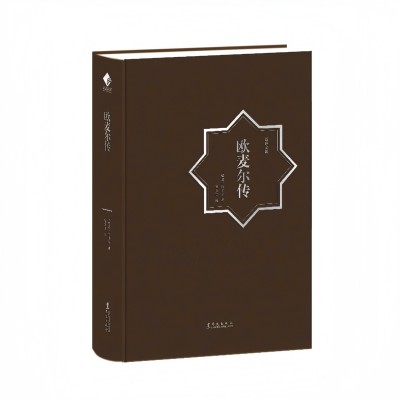
Title: The Biography of Umar bin Khattab
Author: Mohammed Hussein Heikal (Egyptian)
Translator: Wang Yongfang
Publisher: Sino-Culture Press
Edition: 1st Edition, November 2015
Printing: 4th Printing, August 2022
Format: 16 - mo Binding: Hardcover
Printed Sheets: 29.5 Word Count: 360,000 characters
ISBN: 9787507544329
Price: 68.00 CNY
After the death of the Prophet Muhammad of Islam in 632 AD, within the next 30 years, the Arab Muslim community organization had four "Caliphs" (Khalifah) who successively held the religious and political power of the Arab - Islamic state. "Caliph" means "the successor of the Messenger of Allah". This marked the beginning of the early historical stage of Islam, known as the period of the Four Caliphs, also called the era of the Rightly - Guided Caliphs.
The first four Caliphs were elected by the Muslim community. They were Abu Bakr (reigned from 632 - 634 AD), Umar ibn al - Khattab (reigned from 634 - 644 AD), Uthman ibn Affan (reigned from 644 - 656 AD), and Ali ibn Abi Talib (reigned from 656 - 661 AD) in sequence.
During the period of the Four Caliphs, Medina was originally the capital. When Ali was in power, the capital was moved to Kufa, Iraq. During this period, with large - scale foreign military expansion, Islam began to spread to vast areas outside the Arabian Peninsula, which is historically known as "the era of Arab expansion".
Umar was the second Rightly - Guided Caliph after Abu Bakr. In Islamic history, apart from Muhammad, Umar's name is mentioned the most frequently. Within just 10 years of his reign, Umar successively incorporated regions such as Iraq, Syria, Persia, and Egypt into his territory, establishing a vast Caliphate. The territory and influence of this state extended from the Chinese border in the east, to Africa in the west, to the Caspian Sea in the north, and to Sudan in the south, creating a great miracle.
Mohammed Hussein Heikal (1888 - 1956) graduated from a law school in his early years, then went to Paris for further study and obtained a Doctor of Law degree. He served as the chief editor of the daily newspaper Al - Siyasa, the speaker of the upper house, and was re - elected as the Minister of Education for several terms. He had many writings and translations covering various aspects such as politics, law, religion, and literature. He also made significant contributions to the cultural exchange between Egypt and the West. It is notable that although he was not a full - time writer, his novel Zeinab (named after the heroine), published in his youth, was an immediate success and caused a sensation in the literary world. From the aspects of ideological content to artistic form, it is regarded as the first truly meaningful and valuable masterpiece in the history of modern Egyptian literature. His other works include The Life of Muhammad, The Biography of Abu Bakr, The Biography of Umar, etc.
Wang Yongfang (1946 - 2012) was a journalist, editor, and associate senior translator at China Today magazine. He was a senior Arabic translator at the China Foreign Languages Publishing Administration. In 2011, the Translators Association of China specially awarded him the honorary title of Senior Translator. His main translated works include The Life of Muhammad, The Biography of Abu Bakr, The Biography of Umar, The Biography of Uthman, The Biography of Ali, The Moderate Islamic Civilization, The Years of Suffering, etc.
Preface
Chapter 1: Umar in the Pre - Islamic Period
Chapter 2: Umar's Conversion to Islam
Chapter 3: The Period with the Prophet
Chapter 4: In the Era of Abu Bakr
Chapter 5: Umar's New Era
Chapter 6: Abu Ubaidah and Muthanna's Campaigns in Iraq
Chapter 7: The Conquest of Damascus and the Pacification of Jordan
Chapter 8: The Battle of al - Qādisiyyah
Chapter 9: The Conquest of Ctesiphon
Chapter 10: Muslims in Iraq
Chapter 11: Emperor Heraclius of the Roman Empire Withdraws from Syria
Chapter 12: Umar in Jerusalem
Chapter 13: The Situation of Khalid after the Conquest of Syria
Chapter 14: Famine and Plague
Chapter 15: Expansion of Territory and the Conquest of Persia
Chapter 16: The Bloody Battle of Nahāvand
Chapter 17: The Overthrow of the Sassanid Dynasty of Persia
Chapter 18: Planning and Liberating Egypt
Chapter 19: The Liberation of Cairo
Chapter 20: The Liberation of Alexandria
Chapter 21: The Liberation of the Whole of Egypt and the Establishment of a New Order
Chapter 22: Umar's Regime
Chapter 23: A Brief Overview of Society in Umar's Era
Chapter 24: Umar's Consultation Principles
Chapter 25: The Assassination of Umar
Postscript