
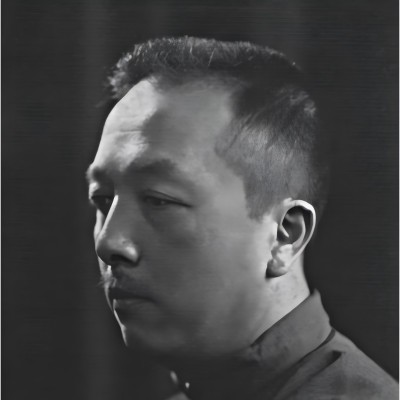
Liu Bannong (1891–1934), originally named Liu Fu and courtesy name Bannong, was a native of Jiangyin, Jiangsu Province. He was a renowned literary figure, linguist, and educator in modern Chinese history. As a prominent figure in the May Fourth New Culture Movement, he participated in the editorial work of New Youth and was a pioneer of vernacular Chinese poetry. He also made significant contributions to calligraphy, photography, and archaeology.
In 1917, Liu Bannong was appointed as a Chinese language teacher at Peking University by its then-president, Cai Yuanpei. In 1920, he went to study at the University of London and later at the University of Paris. In March 1925, he earned his Doctor of Literature degree from France with two theses, including Experimental Records of Chinese Tones, and was awarded the "Constantin Volney Prize in Linguistics." After returning to China, he resumed his position as a professor at Peking University, teaching phonetics and establishing China's first phonetics laboratory. In 1927, he organized China's first "Northwest Scientific Expedition."
In 1920, while studying in the UK, Liu wrote the vernacular poem How Can I Not Think of Her, which was set to music by the linguist Zhao Yuanren, who was also studying in Europe at the time. The song became widely popular in China and remains well-known to this day. The character "她" (tā, meaning "she"), used as a feminine pronoun, was coined by Liu Bannong, who also introduced the character "它" (tā) to represent inanimate objects.
In the summer of 1934, Liu led his students on a field trip to Inner Mongolia to study local customs and dialects. Unfortunately, he contracted a severe illness and passed away shortly after returning to Beijing.
Liu Bannong left behind a rich legacy of works. His new poetry often depicted the lives and struggles of working-class people, using simple and accessible language. He authored poetry collections such as The Whip Collection and The Tile Cauldron Collection, compiled Early Vernacular Poetry Manuscripts, and wrote academic works like A General Theory of Chinese Grammar and Experimental Records of the Four Tones. In 1925, he compiled China's first academic work on Dunhuang studies related to the Silk Road, titled Dunhuang Miscellany. He also wrote a book on photography theory, Bannong on Photography, and translated works such as A Collection of French Short Stories. The Travels of Sulaiman to the East is the only collaborative translation by Liu Bannong and his daughter.