
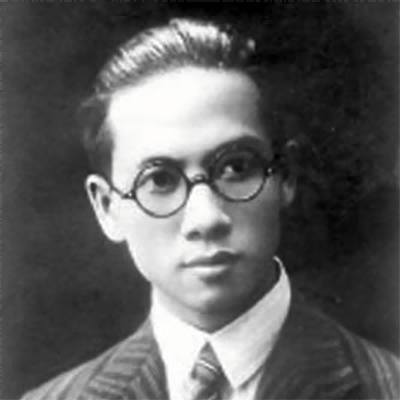
Na Zhong (1909–2008), originally named Na Shou'en and styled Zijia, changed his name to Na Zhong while studying in Egypt. He was born in Najiaying, Tonghai County, Yunnan Province. He was a renowned Chinese Arabist, educator, and historian of Arab history, and a recipient of UNESCO's Sharjah Prize for Arab Culture. Na Zhong dedicated his life to the study of Arab history and Islamic culture. He was one of the first Chinese students to study at Al-Azhar University in Egypt, where he earned the highest diploma, the "Scholar Certificate."
After returning to China in 1940, he served as the Academic Director and Acting Principal of Mingde Middle School in Kunming, as well as the editor-in-chief of The Muslim Bell. He held professorial and departmental chair positions at Central University (now Nanjing University), Yunnan University, Beijing Diplomatic Academy, and Beijing Foreign Studies University. In 2001, he was awarded the inaugural UNESCO Sharjah Prize for Arab Culture. His major works include A General History of the Arabs, Cultural History of Islamic Countries, and Modern and Contemporary History of Egypt. He also translated works such as Arab-Islamic Culture and Islam and Arab Culture. He is celebrated as a towering figure in Arab studies and a friendly envoy of cultural exchange between China and the Arab world.
On January 24, 2008, Na Zhong passed away in Beijing at the age of 99.
March 28, 1909: Born in Najiaying, Tonghai County, Yunnan Province.
1929: Graduated from Kunming Advanced Chinese-Arabic Bilingual School and contributed over 40 articles to The Muslim Bell.
1931–1940: Studied at Al-Azhar University in Egypt, specializing in Islamic studies, Arabic, and Arab-Islamic history and culture.
1936: Awarded the "Scholar Certificate," the highest degree from Al-Azhar University.
1939: Traveled to Mecca, Saudi Arabia, to oversee the boycott of the Japanese puppet "North China Muslim Pilgrimage Delegation" and published articles in Arab media to support China's anti-Japanese resistance.
1940: Returned to China and served as Academic Director and Acting Principal of Mingde Middle School, as well as editor-in-chief of The Muslim Bell.
1942: Appointed as a professor at Central University, where he introduced courses on Arab culture and history for the first time in China.
1958: Transferred to Beijing Diplomatic Academy to establish the Arabic Department and served as its chair.
1962: After the merger of Beijing Diplomatic Academy into Beijing Foreign Studies University, he continued to chair the Arabic Department.
1991: Awarded the title of "Outstanding University Teacher in Beijing" and recognized as a "National Expert with Outstanding Contributions" by the State Council.
2001: Awarded the UNESCO Sharjah Prize for Arab Culture.
Academic and degree committee member at Yunnan University, Beijing Diplomatic Academy, and Beijing Foreign Studies University
Advisor to the Chinese Middle East Society
President and Honorary President of the Chinese African History Research Association
Standing Committee Member and Advisor to the Chinese Islamic Association
Academic committee member of the Institute of World History and the Institute of West Asian and African Studies at the Chinese Academy of Social Sciences
Standing Committee Member and Deputy Editor-in-Chief of the Asian History section for The Encyclopedia of China: Foreign History
Nomination Committee Member of Pakistan's Hijra International Prize Committee
Corresponding Council Member of the Arabic Language Academy in Damascus, Syria
Member of the Sixth National Committee of the Chinese People's Political Consultative Conference
A General History of the Arabs (two volumes): Nominated for the 1999 National Book Award and awarded the First Prize for Outstanding Achievements in Philosophy and Social Sciences in Beijing in 2000.
History of Islamic Culture: A companion to A General History of the Arabs.
Heritage and Integration: Arab Culture: Awarded the Second Prize for Outstanding Achievements in Humanities and Social Sciences by the State Education Commission in 1995.
Cultural History of Islamic Countries (1948)
Modern and Contemporary History of Egypt (1963)
Translations: Including Islam, Islam and Arab Civilization, and The History of Arab-Islamic Culture.
1943: Became the first to teach Arabic at Central University and compiled China's first university-level Arabic textbook.
1945: Introduced courses on Arab-Islamic history and culture for undergraduate students.
1958: Established the Arabic program at Beijing Diplomatic Academy, training diplomatic personnel.
1962: Founded the Arabic Department at Beijing Foreign Studies University and authored the Arabic textbook series, widely adopted nationwide.
1981: Became China's first doctoral advisor in Arab history and culture, mentoring the country's first Ph.D. in Arab history.
Na Zhong made monumental contributions to Arabic education, Arab historical research, and cultural exchange between China and the Arab world, earning him recognition as a founding figure in Chinese Arab studies.