
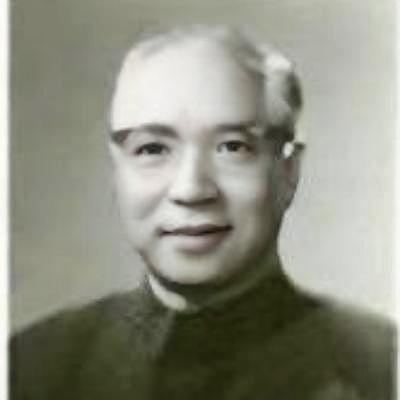
Feng Chengjun (1887–1946), courtesy name Ziheng, was a native of Xiakou (now Hankou), Hubei Province. He studied in Belgium in his early years and later went to the University of Paris, majoring in law, before continuing his studies at the Collège de France under the guidance of the sinologist Paul Pelliot. After returning to China, he served as a professor in the Department of History at Peking University and Beijing Normal University. Proficient in French, English, Sanskrit, Mongolian, and Tocharian, among other languages, and well-versed in Chinese historical texts, Feng made significant contributions to the fields of history, historical geography, historical linguistics, and archaeology. He dedicated his life to the study of Sino-foreign communication history and frontier history, producing a wealth of translations and writings, making him a prominent figure in the study of Sino-foreign communication history during the Republican era. His representative works include Explanations of Geographical Names in the Western Regions, Annotated Edition of Yingya Shenglan, Annotated Edition of Xingcha Shenglan, The Travels of Marco Polo, Biography of Genghis Khan, History of Chinese Maritime Communication with the Southern Ocean, Revisiting the Bai Clan of Kucha, Gaochang Cities and Tang Dynasty Puchang, Studies on Tocharian, History of Chinese Maritime Communication with the Southern Ocean, Archaeological Records of Western China and Studies on Tocharian, History of the Mongols by D'Ohsson, and Historical Materials on the Western Turks.
Feng Chengjun studied in Belgium in his early years and later went to the University of Paris (Sorbonne), where he earned a bachelor's degree in law in 1911. He then entered the Collège de France to study under the sinologist Paul Pelliot. After returning to China, he held positions such as counselor in the Hubei Foreign Affairs Department, secretary of the House of Representatives, and secretary of the Ministry of Education. Starting in 1920, he served as a professor at Peking University and Beijing Normal University, while also holding roles as a legislative compiler and editor for the China Foundation for the Promotion of Education and Culture. Proficient in French, English, Sanskrit, Mongolian, and Tocharian, Feng dedicated his life to the study of Sino-foreign communication history and frontier history, producing a wealth of translations and writings, making him a prominent figure in the study of Sino-foreign communication history during the Republican era. After the age of 50, Feng suffered from paralysis, which weakened his physical condition, and many of his later translations were dictated to his eldest son, Feng Xianshu. He passed away in 1946 at the age of 61.
Feng Chengjun's translations and works spanned multiple fields, including ancient maritime history, Buddhism, linguistics, historical geography of the Western Regions and the Southern Ocean, and Mongol history.
Ancient Maritime History: He translated Édouard Chavannes' Chinese Travelers, Gustaaf Schlegel's Unidentified Countries in Chinese Historical Records, Gabriel Ferrand's Ancient Voyages to Kunlun and the Southern Ocean and Ancient Kingdom of Sumatra, Henri Maspero's History of Champa, Louis Aurousseau's Study on the Qin Dynasty's Conquest of Southern Yue, and Paul Pelliot's Study on the Two Routes to India via Jiaozhi and Guangzhou. He also annotated Zhao Rushi's Records of Foreign Peoples, Ma Huan's Yingya Shenglan, Fei Xin's Xingcha Shenglan, Huang Xingzeng's Records of Tributes from the Western Ocean, and Xie Qinggao's Hai Lu. Additionally, he authored History of Chinese Maritime Communication with the Southern Ocean.
Buddhism and Linguistics: He translated Studies in Buddhism, Geographical Study of the Yaksha Names in the Mahamayuri Sutra, Collation of the Geography of Jambudvipa in the Saddharmasmṛtyupasthāna Sutra, and Study on the Fǎzhùjì and the Arhats It Records. His students posthumously compiled and published his work Studies on Tocharian.
Western Regions and Southern Ocean: He compiled Collected Translations on Historical Geography of the Western Regions and Southern Ocean and authored Geographical Names of the Western Regions, providing important references for the study of the historical geography of these areas.
Mongol History: He translated D'Ohsson's History of the Mongols, René Grousset's Brief History of the Mongols, and Lucien Bouvat's The Timurid Empire, filling gaps in the study of Yuan Dynasty history in China.
Archaeology: He translated Victor Segalen's Archaeological Records of Western China and Édouard Chavannes and Paul Pelliot's Study on the Spread of Manichaeism in China, and authored Study on the Nestorian Stele.
Modern History and Sino-Western Communication History: He translated Louis Pfister's Biographies of Jesuit Missionaries in China, providing important materials for the study of the spread of Catholicism during the Ming and Qing dynasties.
Feng Chengjun's translations and works not only introduced European sinological achievements but also incorporated Chinese historical materials, advancing research in Sino-foreign communication history, Mongol history, and the history of the Western Regions during the Republican era. His works, such as History of Chinese Maritime Communication with the Southern Ocean and Geographical Names of the Western Regions, remain important references in related fields. Additionally, his translation of The Travels of Marco Polo is regarded as the most meticulous and comprehensive version.
Feng Chengjun was one of the pioneers of modern historical and geographical translation in China, standing alongside figures such as Yan Fu and Lin Shu. Gu Jiegang praised him as "the greatest translator of historical geography in the past forty years." His translations and works not only enriched China's academic resources but also promoted cultural exchange between China and the West and the scientific approach to research methods. Feng Chengjun's academic achievements have had a profound impact on the study of Sino-foreign communication history and frontier history for future generations.