
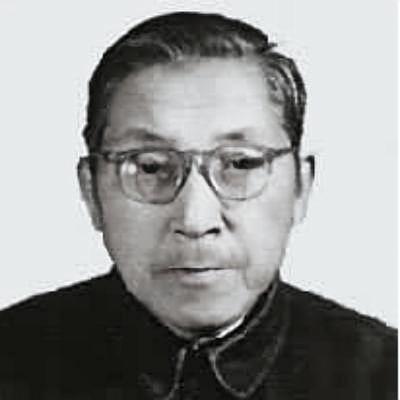
Xiang Da (1900–1966), courtesy name Jueming (also known as Juemin), pen names Jueming Jushi, Fotu Yeshe, and Fang Hui, was a native of Xupu, Hunan Province, and a member of the Tujia ethnic group. He was a historian, archaeologist, bibliographer, translator, and an expert in the history of Sino-Western communication and Dunhuang studies. He was elected as a member of the Chinese Academy of Sciences and served as a professor in the Department of History at Peking University.
Xiang Da was born on February 19, 1900, in Xupu County, Hunan Province. He began his education at Xufu Elementary School and later transferred to the Affiliated Elementary School of Changde Second Normal School. In 1915, he enrolled at Mingde Middle School in Changsha, and in 1919, he was admitted to the Department of Mathematics, Physics, and Chemistry at Nanjing Higher Normal School, later transferring to the Department of Literature, History, and Geography. In July 1923, he entered the Department of History at Southeast University and graduated in June 1924. In 1925, he worked as an apprentice English editor at the Commercial Press in Shanghai. In October 1928, he became the head of the Acquisition Department at the Nanjing Guoxue Library. In 1930, he was appointed as a member of the Compilation Committee of the Beiping Library. In 1934, he traveled to Europe for academic exchange, conducting research and transcribing Chinese books, Dunhuang manuscripts, Turfan ancient documents, Taiping Heavenly Kingdom documents, and Jesuit literature from the Ming and Qing dynasties at institutions such as the Bodleian Library at Oxford University, the British Museum's Oriental Department, the Bibliothèque nationale de France in Paris, and the Prussian Academy of Sciences in Berlin. He returned to China in 1938. In March 1939, he began teaching at Zhejiang University, and in September of the same year, he became a professor in the Department of History at Southwest Associated University and a mentor at the Institute of Liberal Arts of Peking University. In 1942, he served as the head of the archaeology team for the Northwest Historical Geography Expedition of the Academia Sinica. In 1944, he led a second expedition to Dunhuang, focusing on mural art, Han and Tang tombs, and ruins, and participated in the identification of fragmented sutras from the Six Dynasties period discovered by the Dunhuang Art Research Institute. In 1945, he taught at Southwest Associated University, and in 1946, he became the director of the Ancient Artifacts Sorting Office at the Institute of Liberal Arts of Peking University. In February 1949, he was appointed as a professor in the Department of History and the director of the Peking University Library. In May 1954, he became the first deputy director of the Second Institute of History at the Chinese Academy of Sciences, and in 1955, he was elected as a member of the Chinese Academy of Sciences.
From September 1942 to July 1943 and again in 1944, Xiang Da conducted two expeditions to study cultural relics and historical sites in the Hexi Corridor, focusing on sites such as Yangguan, Yumenguan, the Thousand Buddha Caves, Yulin Grottoes, and Wanfo Gorge. He conducted archaeological records of some caves in the Mogao and Yulin Grottoes and investigated scattered Dunhuang manuscripts, such as Ren Ziyi's collection of the Platform Sutra of the Sixth Patriarch, Shenhui's Platform Sermon, and Shouchang County Geography and Tang Dynasty Geography. In 1951, he traveled to the northern and southern regions of the Tianshan Mountains in Xinjiang to study sites related to East-West communication and cave temples.
Xiang Da's major papers include Notes on Dunhuang Popular Literature in London, Catalogue of Dunhuang Manuscripts in London, A Study of Tang Dynasty Popular Lectures, Miscellaneous Studies on Mogao and Yulin, and Supplement and Corrections to Luo Zhenyu's "Supplementary Biography of Zhang Yichao in the Tang History". His major translations include Archaeological Records of the Western Regions by Aurel Stein and Archaeological Records of Gaochang. His authored works include Tang Dynasty Chang'an and the Civilization of the Western Regions, Dunhuang, Collection of Dunhuang Transformation Texts, Three Ancient Versions of the Great Tang Records of the Western Regions, History of Sino-Western Communication, The Influence of Western Art on Chinese Art During the Ming and Qing Dynasties, and Zheng He's Nautical Charts.
Xiang Da was born into a family of minor Qing dynasty officials in Mayangshui Township, Xupu County, Hunan Province. He spent his early childhood in Meixian, Guangdong, where his father served as a county magistrate. After his father's death, his mother, with the help of relatives and friends, returned to their hometown in Xupu with Xiang Da and his siblings. Xiang Da developed a love for reading from a young age, and his mother, though illiterate, valued education and encouraged her children's studies.
"Xiang Da was rigorous in his lifelong academic pursuits and made significant contributions to the study of Sino-Western communication history, ethnic minority history, and especially Dunhuang studies." (Peking University School of Archaeology and Museology)
"Whether in terms of scholarship or moral character, Mr. Xiang Da was first-rate." (Linguist Ji Xianlin)