
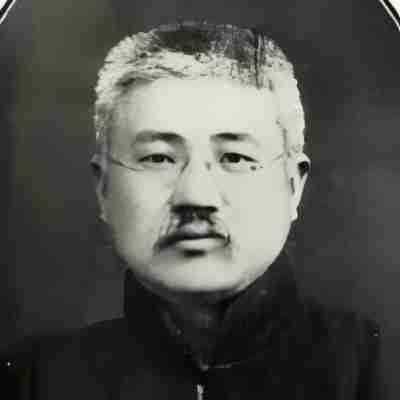
Zhang Xinglang (1889-1951), courtesy name Liangchen, was a native of Nanyuan, Chengxiang, Siyang County, Jiangsu Province, and a renowned modern historian. In 1906, he went to the United States to study in the Department of Chemistry at Harvard University, becoming one of China's earliest graduate students in biochemistry. He was the son of the famous geographer Zhang Xiangwen and the father of Zhang Zhishan, a physics expert at Beijing Normal University. Zhang Xinglang once served as a professor at Peking University and authored works such as The History of European Influence in the East, Marco Polo, and translations of Benedetto's popular edition of The Travels of Marco Polo and The Geographical Foundations of History.
Zhang Xinglang taught at Xiamen University, Fu Jen Catholic University, Peking University, Yenching University, Tsinghua University, and other institutions, maintaining close ties with academic organizations such as the Chinese Geographical Society and the Sino-German Society. From August 1927 to March 1949, except for one academic year when he was on sick leave, he consistently served as the head of the History Department at Fu Jen Catholic University. His long-term leadership had a profound impact on the department's disciplinary development, talent cultivation, and curriculum design. The History Department of Fu Jen Catholic University held a significant position in the landscape of Sino-Western academic exchanges in the first half of the 20th century, and Zhang Xinglang played a pivotal role in this process.
Zhang Xinglang was educated in the classics and history from a young age. In 1899, he moved to Shanghai with his father, Zhang Xiangwen, and at the age of 11, he was admitted to the preparatory class of Nanyang Public School. He later enrolled at Peiyang University to study science. In 1906, he went to Harvard University to study chemistry, graduating three years later. He then pursued physiological chemistry at the University of Berlin in Germany, where he developed a keen interest in history. After returning to China in 1912, he contracted tuberculosis and recuperated at his father-in-law's home in Huangyan, Zhejiang. During this period, he extensively read historical texts and collected materials on Sino-Western communication history.
In 1919, Zhang Xinglang was invited by Cai Yuanpei to serve as a professor in the Department of Chemistry at Peking University. Simultaneously, he worked as a special editor at the university's National History Compilation Office and was dispatched to Japan to investigate historical materials related to the Republic of China. In 1926, he was appointed as the director of the Institute of Chinese Studies at Xiamen University and later held professorships at Fu Jen Catholic University, Tsinghua University, Beijing Normal University, and Yenching University. Many accomplished historians, both in China and abroad, were his students. In addition to teaching, he continued to collect materials related to the history of Sino-foreign relations, translated two versions of The Travels of Marco Polo, and extracted relevant information from 274 Chinese sources and 42 foreign books in English, German, French, and Japanese. Covering topics from astronomy to geography, ethnicity, culture, science, history, politics, economics, and biology, he provided explanations and conducted verifications. Finally, in 1926, he completed the draft of Compilation of Historical Materials on Sino-Western Communication, which was officially published in 1930. The work spans six volumes, over 3,000 pages, and more than 1 million characters.
In addition to Compilation of Historical Materials on Sino-Western Communication, Zhang Xinglang authored The History of European Influence in the East, Marco Polo, and translations of Benedetto's The Travels of Marco Polo and The Geographical Foundations of History. In 1934, at the request of Professor Paul Kahle, dean of the Oriental Institute at the University of Bonn, he began translating the German version of The Travels of Ali Akbar, a Persian account of China published in 1516, into Chinese. Unfortunately, due to changing circumstances in 1937, the project was left unfinished. It was not until the 1980s that his son, Professor Zhang Zhishan of Peking University, with the help of Professor Ji Xianlin, located the German and English translations of the manuscript, which had been preserved in the library of the University of Turin in Italy. Zhang Zhishan and others translated it into Chinese, and the work was published in 1986, fulfilling Zhang Xinglang's unfinished task. This book holds significant historical and academic value, with many German scholars praising its author for delving into folk culture and providing a more profound and rich account compared to The Travels of Marco Polo, which focused more on court and upper-class society. Additionally, the book offers detailed descriptions of major historical events, such as the Tumu Crisis of the Ming Dynasty, which were rarely documented by Western historians.